WA American plate atlas
Washington
The Evergreen State
Meet the plate, people, places, and stories behind one of the road-trip game’s fifty-one essential finds.
Capital
OlympiaState bird
Willow goldfinchJoined the Union
November 11, 188901
A quick trip through time
The Washington story
Washington’s history combines Coast Salish and other Native cultures, maritime trade, timber, railroads, agriculture, aviation, software, and Pacific Rim connections.
02
Bumper-sized history
About the plate
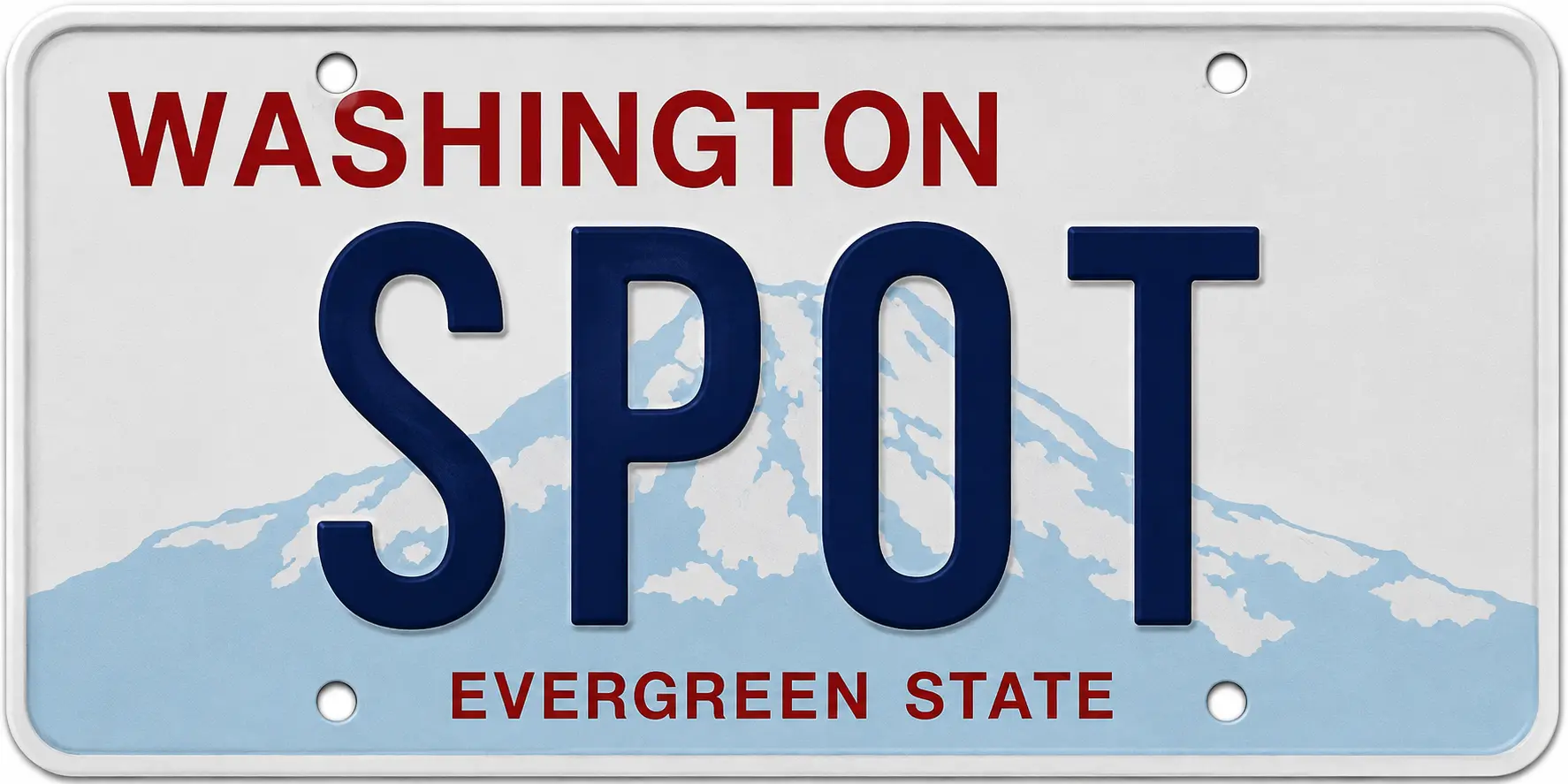
Mount Rainier dominates Washington’s standard plate, creating one of the country’s most scenic and instantly recognizable designs.
Deep Dive Archive · State Volume 13
What Mountain Is on the Washington License Plate?
The mountain on Washington’s standard license plate is Mount Rainier. It appears on the left side of the standard passenger plate, beside the serial number, on a white background with blue characters.
Mount Rainier is the highest mountain in Washington at 14,410 feet and its snow-covered summit dominates the skyline across much of western Washington on clear days, including Seattle and Tacoma. That visibility has made the mountain a familiar part of the state’s signs and symbols — and, since the late 1980s, its license plate.
The mountain became the central feature of Washington’s modern plate design during the Centennial era in the late 1980s, when the state prepared to mark 100 years of statehood. Every standard Washington passenger plate issued since has carried a version of that mountain, so if you see a white plate with a blue mountain on the left, Washington is a safe guess.
Why Is Mount Rainier on the Washington License Plate?
Mount Rainier is strongly associated with Washington. It is the highest peak in the Cascade Range and the tallest mountain in the state, and it dominates the skyline across much of western Washington — visible from Seattle, Tacoma, and the surrounding lowlands whenever the weather allows.
When the legislature directed a new plate design for the state’s centennial in the mid-1980s, Mount Rainier became the design’s central landscape feature. State records document the requirement for a centennial design, but they do not record an official statement of why the mountain was chosen; its place on the plate reflects how closely it is tied to the state itself. The layout — mountain left, serial right, state name across the top — has stayed easy to recognize for decades through several redesigns since.
When Did Mount Rainier First Appear on Washington License Plates?
Mount Rainier first appeared on Washington’s standard passenger plate with the Centennial design distributed beginning January 1, 1987. In 1986 the legislature directed the Department of Licensing to develop a centennial design in cooperation with the Washington centennial commission, and the law required the new plates to go to all new registrations and plate replacements starting on that date.
No earlier standard Washington plate depicted the mountain. From the first state-issued tags of 1915 through the mid-1980s, Washington plates carried serials, colors, and county codes but no scenic imagery. The Centennial plate was the first to put Mount Rainier on the standard issue, and it has stayed there ever since.
Is the Mountain on the Washington Plate Mount Rainier or Mount Baker?
It is Mount Rainier. The standard Washington plate depicts Mount Rainier, the state’s highest summit — not Mount Baker, which sits farther north near the Canadian border. Both are snow-capped Cascade volcanoes that can look similar from a distance, but the mountain on the plate is Mount Rainier, and it has been since 1987.
What Does the Current Washington License Plate Look Like?
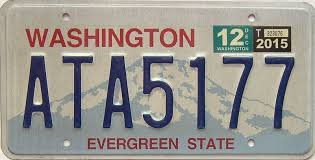
The current standard passenger plate has a white background, blue characters, and a Mount Rainier graphic on the left. WASHINGTON runs across the top, there is no slogan along the bottom, and the serial format is three letters followed by four digits (ABC 1234). A revision issued in late 2024 changed the characters from embossed to flat-printed navy blue.
Washington License Plate History
Early Washington License Plates
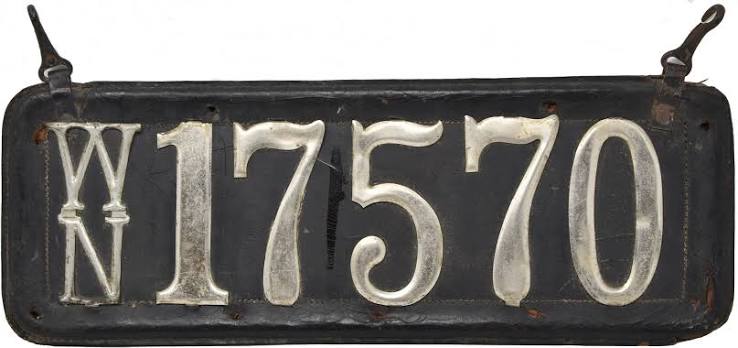
Registration came first. Washington required statewide motor-vehicle registration in 1905, but for the next decade registrants provided their own plates — typically homemade numbers on leather or metal attached to the vehicle. The state began manufacturing and issuing its own plates in 1915, with the familiar dated series starting in 1916: a serial number, “WN” at the left, and the year at the right.
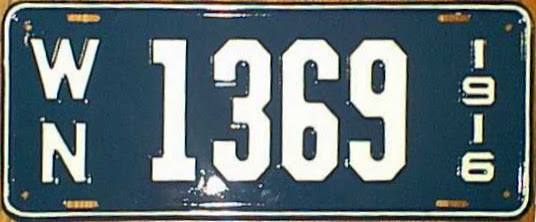
Once the state took over plate production, Washington issued a new plate every year, and the colors changed almost as often. The 1916 plate was white on dark blue; two years later the state had moved to black on yellow. The pattern continued for decades — the 1930 plate was green on white, and the mid-1960s plates were green on white with the county code built into the serial.
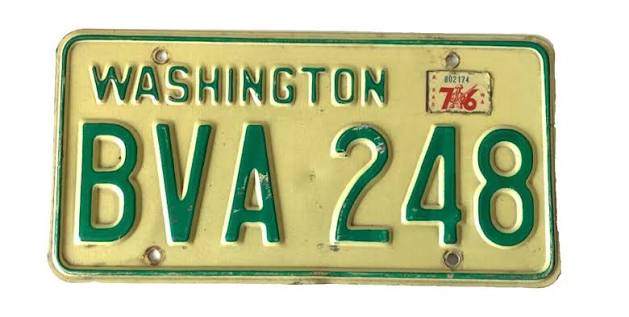
Two other changes stand out from this era: in 1956 Washington adopted the national 6 × 12-inch plate size, and in 1968 state law required plates to be treated with fully reflectorized materials for visibility at night. County-code serials, used from 1935 through 1981, later gave way to straight letter-number serials, and revalidation moved from metal tabs to windshield stickers over the same decades.
The Centennial Plate
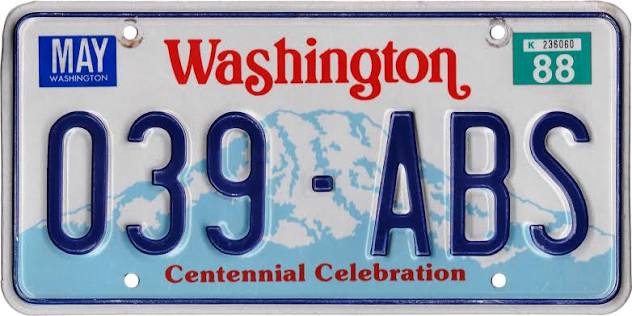
In 1986, with Washington’s 1989 centennial approaching, the legislature directed the Department of Licensing to develop a new centennial plate design using reflectorized materials, in cooperation with the Washington centennial commission. The law required distribution of the new plates to begin January 1, 1987, to all new registrations and plate replacements.
The result was a reflective white plate with a light blue Mount Rainier graphic, dark blue serials, and “Centennial Celebration” screened along the bottom — Washington’s first standard plate to depict the mountain. It set the template that every standard plate since has followed.
From Centennial to the Modern Mount Rainier Plate
When the Centennial wording was dropped in late 1990, the mountain stayed. In 1998 the design gained the red “EVERGREEN STATE” caption it carried for the next twelve years, and in 2010 the serial format changed from ABC 123 to ABC 1234. The most recent revision, in late 2024, swapped embossed characters for flat-printed navy blue ones.
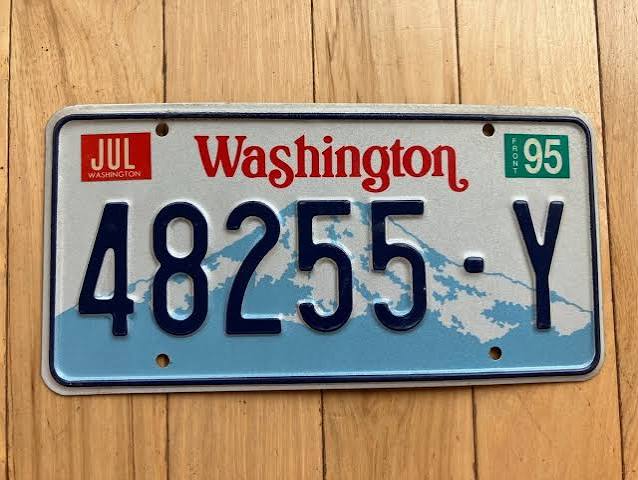
The layout — mountain left, serial right, state name across the top — has not materially changed in nearly four decades.
Washington Plates Today
Today’s standard passenger plate is a direct descendant of the 1987 Centennial design: white background, blue characters, Mount Rainier on the left, and WASHINGTON across the top. Washington also issues a wide range of specialty designs, so a plate without the mountain can still be from Washington — the standard plate is simply by far the most common.
Does Washington Require a Front License Plate?
Yes, for most vehicles. Washington law requires two identical plates, displayed conspicuously at the front and rear of each vehicle whenever two plates have been issued. Trailers, semitrailers, campers, mopeds, collector vehicles, horseless carriages, and motorcycles receive a single rear plate. The Washington State Patrol can grant exceptions where a vehicle’s body construction makes front display impossible.
Washington License Plate FAQ
What mountain is on the Washington license plate?
Mount Rainier. It has been the central image on the standard passenger plate since the 1987 Centennial design.
Is the mountain on the Washington plate Mount Rainier or Mount Baker?
Mount Rainier. Mount Baker is not on the plate; the standard design depicts Rainier, the state’s highest summit.
When did Mount Rainier first appear on Washington plates?
With the Centennial design, whose distribution the legislature required to begin January 1, 1987. No earlier standard Washington plate showed the mountain.
What does the current Washington plate look like?
White background, blue characters, Mount Rainier on the left, WASHINGTON across the top, and an ABC 1234 serial with no slogan.
Does Washington require a front license plate?
Yes, for most vehicles — two plates, displayed front and rear. Several classes, including motorcycles, trailers, and collector vehicles, display a single rear plate.
Can old Washington plates be used on classic cars?
Often, yes. A qualifying collector vehicle — generally 30 years old or older under current Department of Licensing rules — can display an authentic restored Washington plate from the year the vehicle was manufactured. The plate must be restored to its original design (reproductions are not accepted) and approved by DOL at a vehicle licensing office; restored plates display on the rear. Vehicles built before January 1, 1916 qualify separately for Horseless Carriage plates.
Sources
- Washington DOL — License plates
- Washington DOL — Collector Vehicle plate
- Washington DOL — Restored plates
- Washington DOL — Horseless Carriage plate
- Washington DOL — Custom and special design plates
- RCW 46.16A.200 — License plates (design, display, and reflectorization)
- Laws of Washington 1987, Chapter 178 — Centennial license plates
- Laws of Washington 1986, Chapter 280 — Centennial license plates